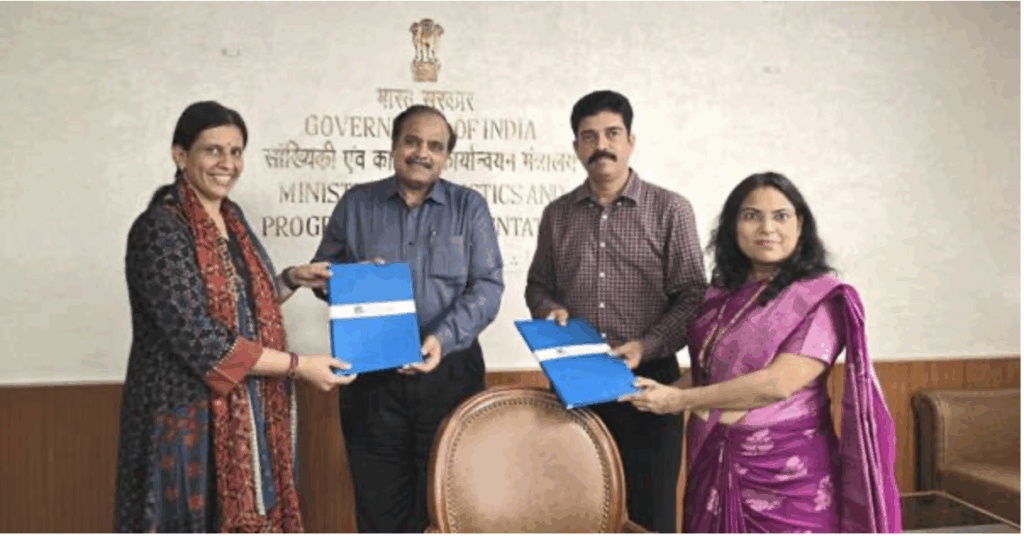
IICA Certified Mediator Programme (ICMP) at a glance
Applicability to a practising Chartered Accountant
| Aspect | Key details |
| Institution | The Indian Institute of Corporate Affairs (IICA) is an autonomous institute under the Ministry of Corporate Affairs. It has a Centre of Excellence in Alternative Dispute Resolution (CEADR) and offers a flagship IICA Certified Mediator Programme (ICMP). |
| Programme structure | The ICMP is a 60‑hour+ practitioner‑centric training with 12 modules covering ADR fundamentals, conflict analysis, communication and negotiation techniques, roles of mediators and stakeholders, legal & institutional frameworks (Indian and international), the mediation process, online dispute resolution, and case‑based learning (Indian and international), culminating in master‑classes from experienced mediators[1]. Training can be fully online, hybrid or fully in‑person, with a final assessment and qualifying examination leading to accreditation[2]. |
| Eligibility & intake | Candidates must have a bachelor’s degree with at least 55 % marks from a recognised institution[3]. About 30 seats per batch are available[4]. |
| Fees | The October–December 2025 batch charged ₹45,000 to ₹50,000 for Indian participants (depending on early‑bird deadlines) and US $1,500 to US $750 for international participants (based on the World Bank income classification)[5]. Group‑discounts apply for sponsored participants[6]. |
| Participants & recognition | IICA has trained over 400 mediators so far[7], with participants from Indian regulators (IBBI, SEBI, CBDT, SIDBI, Income Tax Dept.) and international organisations[8]. The programme is not a UGC‑recognised degree but confers accreditation as an “IICA Certified Mediator”[9]. The accreditation does not expire and allows one to practise mediation independently[10]. |
Career benefits highlighted by IICA
The IICA notes that the accreditation provides career benefits:
- Company executives and employees: competitive advantage, better promotion prospects and skills to handle workplace conflicts[11].
- Government officials: beneficial for officials dealing with private players or acting as regulators[12].
- Retired judicial officers: adds professional credentials for court‑annexed and private mediations[13].
- Professionals (including CAs): broadens services by allowing entry into the mediation market[14].
- Company directors/KMPs: equips them to manage commercial, financial and operational disputes effectively[15].
- Community/NGO leaders: provides tools to resolve community disputes[16].
Applicability to a practising Chartered Accountant
Why mediation skills complement accountancy
- Frequent involvement in disputes – Practising Chartered Accountants often assist clients in shareholder agreements, joint ventures, mergers, valuation disputes, tax assessments and insolvency proceedings. Disputes frequently arise during execution of commercial contracts, financial restructurings or family business separations. Training as a mediator equips a CA to handle these conflicts neutrally and helps clients avoid protracted litigation.
- New professional avenue – The ICMP allows professionals to practise as mediators. The IICA emphasises that accreditation widens the scope of services offered by professionals[14]. With the Mediation Act 2023 mandating pre‑litigation mediation in commercial disputes (Section 4 and Section 12A of the Commercial Courts Act) and making settlement agreements enforceable as court decrees[17], demand for accredited mediators is expected to surge.
- Alignment with CA skill‑set – CAs possess expertise in accounting, taxation, finance and law, and are trusted advisors in corporate decision‑making. These skills are valuable when mediating company disputes, shareholder disagreements, financial fraud allegations or valuation issues. The Institute of Chartered Accountants of India (ICAI) itself offers a Certificate Course on Mediation to equip CAs with mediation skills. This 40‑hour course covers the mediation framework, roles, ethics and international opportunities and specifically highlights “Opportunities for Chartered Accountants” in mediation[18]. Thus, the profession recognises mediation as a viable practice area.
- Regulatory and commercial environment – India faces a backlog of over 46 million cases; the Supreme Court’s Mediation Centre handled 1,095 cases in 2023 with a settlement rate of 23.7 %[19]. Nationwide, mediation cases totalled 444,814 in 2022, but resolution rates hover between 24 % and 29 %[19]. The new Mediation Act aims to make mediation a primary pathway for commercial disputes, and demand for trained mediators is growing. India has over 16,000 trained mediators and nearly 600 dedicated centres[20], yet settlement rates vary widely. A professional with financial and legal acumen can help improve outcomes in complex corporate disputes.
Areas where IICA‑certified mediators typically work
The ICMP’s curriculum covers diverse case‑studies, indicating the scope of practice:
- Commercial and corporate disputes – Cases involving contracts, shareholder agreements, joint ventures, infrastructure projects, supply agreements and intellectual property. Participants study mediation of commercial and industrial disputes[21]. The programme emphasises pre‑institution mediation under Section 12A of the Commercial Courts Act, 2015[22], which is mandatory for commercial suits above ₹3 lakh[23].
- Property and family business disputes – The curriculum includes mediation of family‑run business conflicts and property matters (both Indian and cross‑border)[21]. CAs often advise on valuations and succession planning, making them valuable neutral mediators.
- Industrial and community disputes – Cases involving labour‑management conflicts, employee grievances, or community disputes around public projects[21]. CAs with management experience can contribute to such mediations.
- Public governance and inter‑state disputes – The course exposes participants to mediation in regulatory and public governance contexts[24], although these may require specialised domain knowledge.
- Cross‑border and international disputes – Modules cover international commercial disputes, territorial/geopolitical matters and trade conflicts[21]. With India becoming a party to the Singapore Convention on Mediation, accredited mediators may find opportunities in global deals and multi‑jurisdictional disputes.
- Online dispute resolution (ODR) – The course trains participants in ODR and hybrid dispute resolution, reflecting trends in the digital economy[25].
Because the IICA programme is oriented toward corporate affairs, many mediators work in company boards, legal departments, regulatory bodies, insolvency processes and contractual negotiations. Mediators may also be empanelled with courts, state dispute resolution societies or private ODR platforms (e.g., SAMA). For example, Delhi’s Commercial Court Mediation Centre at Tis Hazari reported handling 2,100 mediation applications in 2023, settling 1,340 cases (≈64 % success rate) within about 45 days[22], and the Delhi Dispute Resolution Society resolved 15,834 of 23,754 disputes (66.7 % success rate) within 7–30 days[26]. Such centres often need mediators with business understanding.
Statistical picture of mediation and corporate dispute resolution
- Success rates vary significantly – Court‑annexed mediation centres in Delhi and Mumbai have reduced case pendency by over 18 % within three years[27]. Delhi’s commercial mediation centre achieved ~64 % settlement[28], the Bangalore Mediation Centre historically reports 65 % success with over 37,230 cases mediated and 24,092 settlements[29], and Mumbai’s figures are similar. Conversely, the Supreme Court Mediation Centre recorded only 23.7 % settlement in 2023[19]; nationwide resolution rates range between 24 % and 29 %[19] due to variability in training and awareness.
- Pre‑litigation commercial mediation is gaining traction – The Mediation Act, 2023 and Section 12A of the Commercial Courts Act require pre‑institution mediation for commercial disputes. In 2019‑20 the Supreme Court’s Mediation and Conciliation Project Committee (MCPC) reported settlement rates of around 68 % for mediated cases (as quoted in professional articles)[30], although these figures are not uniform nationwide.
- Cost and time advantages – Studies show mediation in India costs ₹10,000–₹50,000 versus litigation costs exceeding ₹2,00,000; thus businesses save 80–90 %[31]. Mediation typically resolves disputes within 2–6 months, and the Act mandates completion within 180 days[32]. This is crucial given India’s backlog of over 46 million cases[33].
- Business benefits – Research indicates that 94 % of businesses using mediation believe it preserves relationships, compared to 35 % with litigation[34]. Such preservation is critical in India’s relationship‑driven corporate culture.
- Demand–supply gap – India has over 16,000 trained mediators and nearly 600 mediation centres[20], but case volumes are rising, and settlement rates remain modest. The government is promoting sector‑specific mediation cells to improve uptake[35].
Assessment: Should a practising CA pursue the ICMP?
Advantages
- Enhances dispute‑resolution competency – As a CA, you routinely advise on company law, taxation and financial matters. Mediation training gives you the skills to manage commercial, tax, insolvency, family business and shareholder disputes. You can offer value‑added services by guiding clients through pre‑litigation mediation mandated by the Commercial Courts Act and the Mediation Act.
- Professional diversification and branding – Accreditation as an IICA Certified Mediator is nationally recognised (under the aegis of the Ministry of Corporate Affairs) and allows independent practice. It strengthens your professional brand and could lead to roles on dispute boards, insolvency resolution panels, negotiation teams or court‑annexed mediation panels.
- Networking and global exposure – The ICMP’s faculty includes international mediators and commercial law experts[36]; participants come from regulators (SEBI, IBBI, CBDT, etc.) and global organisations[8]. This network may open doors for cross‑border disputes and high‑value corporate mediation.
- Alignment with future regulations – The Mediation Act makes mediation central to corporate dispute management and sets up the Mediation Council of India. Early adoption may position you as a pioneer when corporate boards look for qualified mediators.
Considerations
- Time and cost – The course requires 60+ hours of commitment over three months (online) or six days (in‑person). Fees are ₹50,000 plus GST[37], and additional time must be allotted for the final assessment. Evaluate whether your practice can accommodate this.
- Market competition – While the demand for mediators is rising, resolution rates in some centres remain low (around 25 %[19]). Success depends on building a reputation and securing appointments, which may require marketing and networking efforts.
- Alternative options – The ICAI’s 40‑hour Certificate Course on Mediation is tailored to CAs, is shorter and less costly (₹20,000 for physical; ₹5,000 online) and covers mediation law, commercial applications and global opportunities for CAs[38]. This course might serve as a starting point before committing to the more intensive ICMP.
Conclusion and recommendation
Mediation is no longer peripheral—it is becoming a legally mandated step in commercial dispute resolution. The IICA Certified Mediator Programme offers comprehensive training, global exposure and government‑backed accreditation. For a practising CA who regularly navigates company law, insolvency and tax disputes, learning mediation can diversify the practice, create additional revenue streams and position you as a trusted neutral in corporate conflicts.
Because the programme is intensive and moderately expensive, consider the ICAI’s Certificate Course on Mediation as an initial step. If you find mediation aligns with your interests and practice, pursuing the IICA Certified Mediator accreditation would be worthwhile, especially as demand for skilled mediators is expected to grow under the Mediation Act 2023. Ultimately, your decision should balance time and financial investment against the potential expansion of your professional capabilities and market reach.
[1] [2] [3] [7] [8] [9] [10] [11] [12] [13] [14] [15] [16] [21] [24] [25] [36] Mediation
[4] [5] [6] [37] Batch XXI – ICMP Brochure (Final)
[17] [23] [30] [31] [32] [34] Why Mediation: The Strategic Commercial Imperative for Modern Business – Track Second
[18] [38] ICAI – The Institute of Chartered Accountants of India
[19] [20] [35] India pushes to fix its dispute resolution gridlock with mediation: Indian Mediation Week returns with a focus on tech, trust, and tangible outcomes, ETLegalWorld
[22] [26] [27] [28] [33] 50912.pdf
[29] Bangalore Mediation Centre has 65% success rate in settling disputes | Bengaluru News – Times of India
Leave a Reply